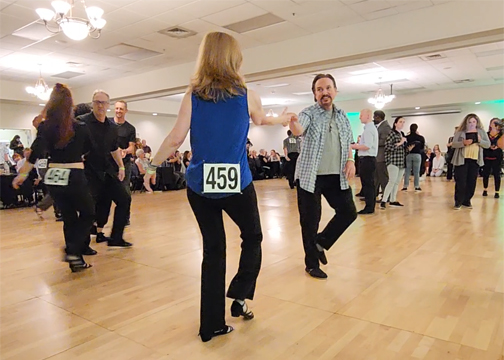
I chose to compete not for validation, but for accountability. Competition gave me a clear benchmark and a reason to measure my progress against others in the West Coast Swing community. It set a standard that pushed me to refine my technique, my preparation, and my mindset. Competing keeps me honest about where I am and where I still need to grow.
Early on, I approached competition with a narrow focus on winning. Over time, that perspective shifted. I learned to view competition less as a judgment of worth and more as a snapshot, a comparison among dancers who happened to show up that day, dancing to that music, in front of that panel of judges. Understanding that context reduced anxiety and re-framed results as information rather than verdicts.
Handling wins, losses, and plateaus taught me resilience. I stopped asking whether I placed well and started asking whether I danced better than I did last year. That internal metric became far more motivating and sustainable. Competition revealed that preparation matters, but mindset matters just as much. Letting go of external validation allowed me to focus on connection, clarity, and presence.
Partnerships and judging further shaped…
Partnerships and judging further shaped my perspective. Results are influenced by many factors: how judges interpret the dance, which moments they see, who your partner is, and how well your styles align. Recognizing this helped me release comparison and focus instead on being a supportive, responsive partner.
I am better prepared today to help other dancers navigate the emotional side of competition, stress, ambition, and identity. I remind them that we compete because we love West Coast Swing, not because points define us. Competition is a place to showcase hard work, honor your partner, and enjoy what you create together. I feel competitors as whole look at completion the same way, not just point chasers for status.