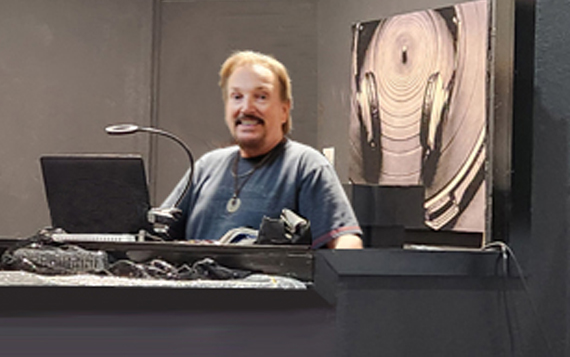
Becoming a West Coast Swing DJ deepened my understanding of music in ways that transformed both my dancing and my teaching. As a DJ, I began to hear music structurally, recognizing phrasing, downbeats, rhythm layers, and how energy builds and releases over time. Music provides the framework for interaction between partners, and DJ-ing sharpened my awareness of how dancers respond to that framework.
The responsibility of a DJ extends far beyond selecting songs. A well, constructed “dance set” supports dancers physically and emotionally. Pacing matters. Playing too many fast-tempo songs in succession can exhaust dancers and empty the floor. A thoughtful DJ blends energy, rhythm, and tempo so dancers can stay engaged without burnout. The goal is to serve the dancers, not personal taste.
Reading the room became one of my most valuable skills. In West Coast Swing, musical diversity comes naturally because the dance adapts to many genres. Maintaining energy has less to do with beats per minute and more to do with rhythmic flow and contrast. Observing how dancers respond in real time taught me to adjust quickly and intentionally.
One particularly impactful lesson…
One particularly impactful lesson came from watching another DJ play a set while ignoring the floor. Dancers gradually sat down until the only person enjoying the music was the DJ himself. That moment reinforced a simple truth: DJ-ing is a service. The music exists for the dancers, not the other way around.
This perspective directly informs how I teach musicality and adaptability. DJ-ing trained my ear to separate vocals, percussion, and instrumental layers, allowing dancers to choose how they respond within the music. As a DJ, I know can see both sides of the floor, what the DJ provides and how the dancer interprets it. As a teacher I show dancers how to listen deeply, not just move, creating a richer and more connected dance experience.